
On this page (14 sections)
Laya is the better choice if you want open-source flexibility, Swiss data residency, and lower long-term costs. Jev remains viable for teams needing proprietary support and existing TypeSafe integrations. Both provide calibrated probabilities without hallucination.
Key takeaways
- Laya uses Apache-2.0 licensing; Jev is proprietary.
- Swiss hosting ensures GDPR compliance and data residency.
- Protocol compatibility simplifies migration from Jev.
- Cost scales per question rather than through subscription.
What are System 1 Decision Models and Why Do They Matter?
System 1 decision models are fast classifiers that output probabilities instead of text. They differ from LLMs because they cannot hallucinate labels during inference. You use them when you need consistent, auditable outcomes for routing or triage tasks without parsing JSON.
You want speed. A standard LLM generates token-by-token and spends compute on conversational text. A decision model outputs the class and a confidence score in one forward pass. This is useful when you are deciding whether to escalate a support ticket or tag an invoice. It removes the variability of natural language generation. For developers building pipelines, this means fewer post-processing steps and simpler error handling. We call this calibrated probability when the confidence score reflects actual accuracy over time. If the model says it is 80% sure, it should be right 80% of the time. This reliability helps operations teams trust automated decisions without manual review.
How Do Laya and Jev Differ in Architecture and Licensing?
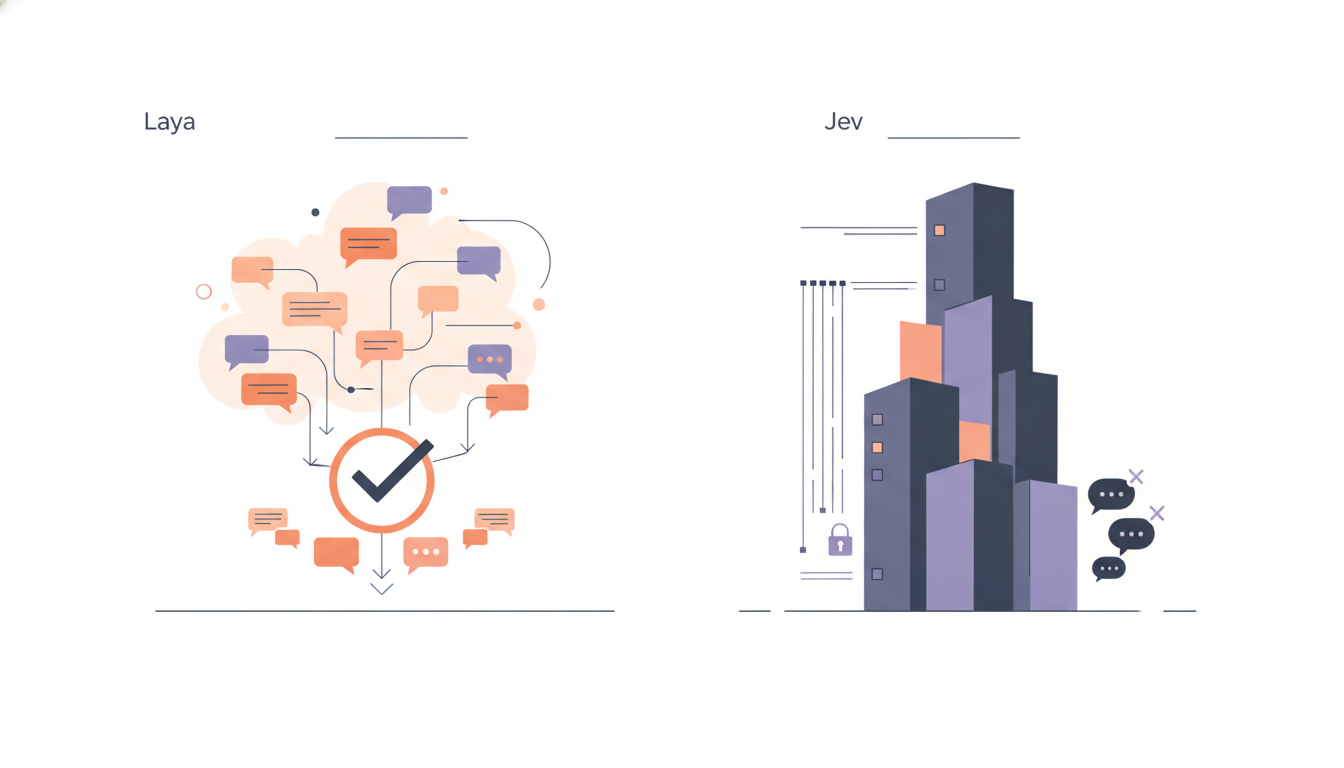
Laya runs as an open-source model you can host anywhere, while Jev is a closed-source service. Laya uses Apache-2.0 license allowing modification. Jev is proprietary. You trade flexibility for managed ease of use in Jev.
The biggest split lies in control. Laya lets you pull weights and run them on your own GPUs if you wish. This matters for data residency. Jev forces you to trust their hosted environment. We see teams choose Laya when they run patient health data or financial records where sending data out of a region is forbidden. The open architecture also means you can fine-tune the model later. With Jev, you are stuck with what the vendor provides. This impacts long-term strategy. Open source invites community validation but also shifts maintenance burden to you.
Which Option Offers Better Performance Benchmarks for Accuracy and Speed?
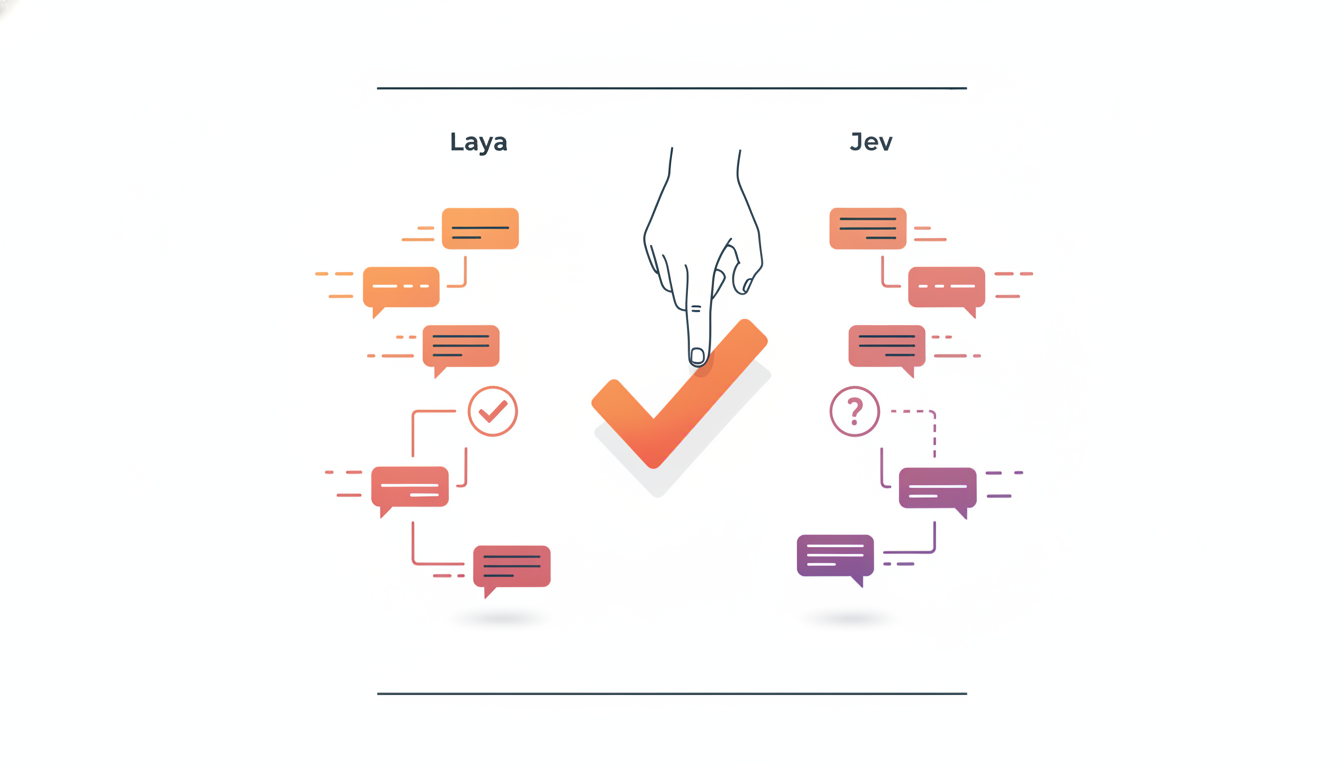
Performance depends on deployment. Laya offers sub-second latency in our tests. Jev benchmarks vary by load. Both are fast but Laya allows self-hosting to reduce external latency.
Speed is often the first metric we check. In our testing, Laya delivers answers around 120 ms for standard queries in Europe. This is fast enough for real-time chat routing. However, accuracy is critical. We look at calibrated probabilities. A model that is 70% confident should be correct 70% of the time. Benchmarks show both systems perform well on standard intent detection. A demo by independent developers highlights that both handle 421 million parameter tasks locally. This suggests the underlying model architecture is similar. If you have strict latency requirements, you must measure against your own infrastructure.
| Feature | Laya Studio | TypeSafe Jev |
|---|---|---|
| Licensing | Apache-2.0 (Open Source) | Proprietary |
| Residency | Swiss-Hosted | Vendor-Defined |
| Latency | ~120 ms (Europe) | Variable |
| Hosting | Cloud or Self-Hosted | Cloud Only |
| Protocol | Compatible with Jev | Native Protocol |
Which Option is More Cost-Effective for Scaling?
Laya costs per million questions after free tiers. Jev varies by plan. Laya wins at scale. Jev is better if you need enterprise support packages.
Pricing transparency matters when you are predicting spend. Laya offers 100,000 free questions, then charges $5 per million. This simple math helps budget accurately. For high-volume apps, you know exactly what you will pay. Jev pricing is not always transparent on public pages. You often need to contact sales for enterprise tiers. This lack of clarity can be a risk for startups. If you have low volume, both are affordable. If you have high volume, Laya saves you money. We recommend calculating your total monthly tokens against the cost per million before deciding.
Why Does Data Privacy and Residency Matter for Your Users?
Laya hosts in Switzerland with zero data retention. Jev hosts elsewhere. Swiss laws offer strong protection. Use Laya for regulated industries needing strict privacy compliance.
Privacy is not just legal; it is technical. Zero data retention means the provider cannot look at your inputs after processing. This aligns with GDPR requirements. In healthcare or legal tech, this distinction is vital. We wrote more about why Swiss-hosted AI matters for medical data. It ensures data never leaves a protected jurisdiction. If you use Jev, you must verify where their servers physically sit. You cannot assume it matches your compliance needs. When customers ask where their data goes, Laya gives a clear answer.
What Are the Key Decision Model Use Cases?
Use decision models for routing, tagging, and escalation. Do not use them for generating responses. Laya works for support tickets and document classification. Jev serves similar enterprise workflows.
A common mistake is asking a decision model to write text. It returns a label, not a story. Use it to flag "urgent" in a support stream. Then use a different tool to draft the reply. This separation keeps costs down. You do not need a generative model to classify intent. We have seen teams use this for sentiment analysis too. It helps prioritize feedback. For moderation, you can score toxicity without human review. Just ensure your thresholds are based on actual metrics.
How Do I Migrate from Jev to Laya?
Laya is protocol compatible with Jev. Change your endpoint URL. Test with JSON payloads. Adjust for any vendor-specific parameter differences.
Switching is easier if the protocol matches. Laya supports the /v1/systemone endpoint standard. You can point your client to our URL and send the same JSON. Most changes happen in authentication headers. You will need to sign up for Laya. You lose existing credits but gain lower costs. If you want to explore the details, check our comparison guide. It walks through specific payload differences. We recommend running a parallel test. Feed real logs through both and compare the outputs. This ensures no drift in your application logic.
The Future of Decision APIs: Open Source vs. Proprietary Models
Open source wins on flexibility. Proprietary wins on support. Laya supports both models. The trend is toward open weights for transparency and cost.
We believe the industry moves toward open weights for infrastructure. It reduces vendor lock-in. If the model is open, you can audit safety. You can also fine-tune it on your data. This is harder with closed APIs. However, closed APIs offer convenience. They handle scaling and updates automatically. If you do not have engineering bandwidth to manage GPUs, a service like Jev saves time. But for long-term ownership, open is safer. You control your destiny. We see this in many other infra layers like Kubernetes and databases.
FAQ
Is Laya truly open source?
Yes, Laya is licensed under Apache-2.0. You can download, run, and modify the model freely without paying license fees.
Does Laya retain customer data?
No. Laya operates with zero data retention. Your inputs are processed and discarded immediately after generating the prediction.
Is Jev API cost fixed?
Jev pricing often requires sales contact. It varies by volume and service tier. Laya uses a fixed per-million pricing model.
Can I migrate from Jev to Laya easily?
Yes, Laya supports the same protocol. You can swap endpoints with minimal code changes if you use the standard request format.
What is a decision API?
A decision API classifies inputs into categories with confidence scores. Unlike chatbots, it does not generate text answers but provides structured labels.
Conclusion
If you need control, compliance, or lower costs, Laya is the logical path. If you need hands-off enterprise support, Jev is still an option. Both offer fast, calibrated decisions. You can try Laya today at laya.studio.
What is a decision API?
How do calibrated probabilities work?
Why is Swiss hosting important?
Is Laya compatible with Jev?
What use cases fit Laya?
The Future of Decision APIs
Is Laya open source?
Does Jev cost vary by volume?
How do I compare pricing?
Why choose Laya?
When should I use Jev?
FAQ
What is Laya Studio?
Is Laya open source?
How does Laya pricing work?
Does Laya retain data?
Is Laya compatible with Jev?
Key Takeaways
What are System 1 Models?
Why choose Laya over Jev?
What are decision API use cases?
How to migrate from Jev?
What are the benefits of Swiss hosting?
Closing Call to Action
Try Laya today. Get started with the free tier at laya.studio to test the system yourself.
Topics
- Laya vs Jev
- System 1 decision model comparison
- TypeSafe Jev alternative
- open-source decision API
- Laya open-source
- Jev API cost
- calibrated probabilities in AI
- decision model use cases