On this page (7 sections)
The true cost of an AI decision API isn't just per-token rates; it's the total spend per resolved query after accounting for context, retries, and output generation. For classification tasks, specialized decision APIs like Laya often cost less than general LLMs because they avoid expensive token generation entirely.
Key takeaways
- Token pricing masks the real cost of decision-making workloads.
- Specialized decision APIs can reduce costs by avoiding output token charges.
- Data residency and retention policies impact compliance overhead.
- Caching and batching strategies are critical for production budgets.
What are the current AI API pricing models in 2026?
Most AI providers charge based on the total number of tokens processed, including both input context and generated output. Decision-specific services often shift to a per-question model, billing only for the resolved intent rather than raw text volume. This change aligns cost with business value.
General LLMs typically price input tokens cheaper than output tokens. However, for classification tasks where you only need a label, paying for generated text is inefficient. You can find detailed breakdowns of current rates on AI Pricing Guru.
Why is 'sticker price' misleading for AI decision APIs?
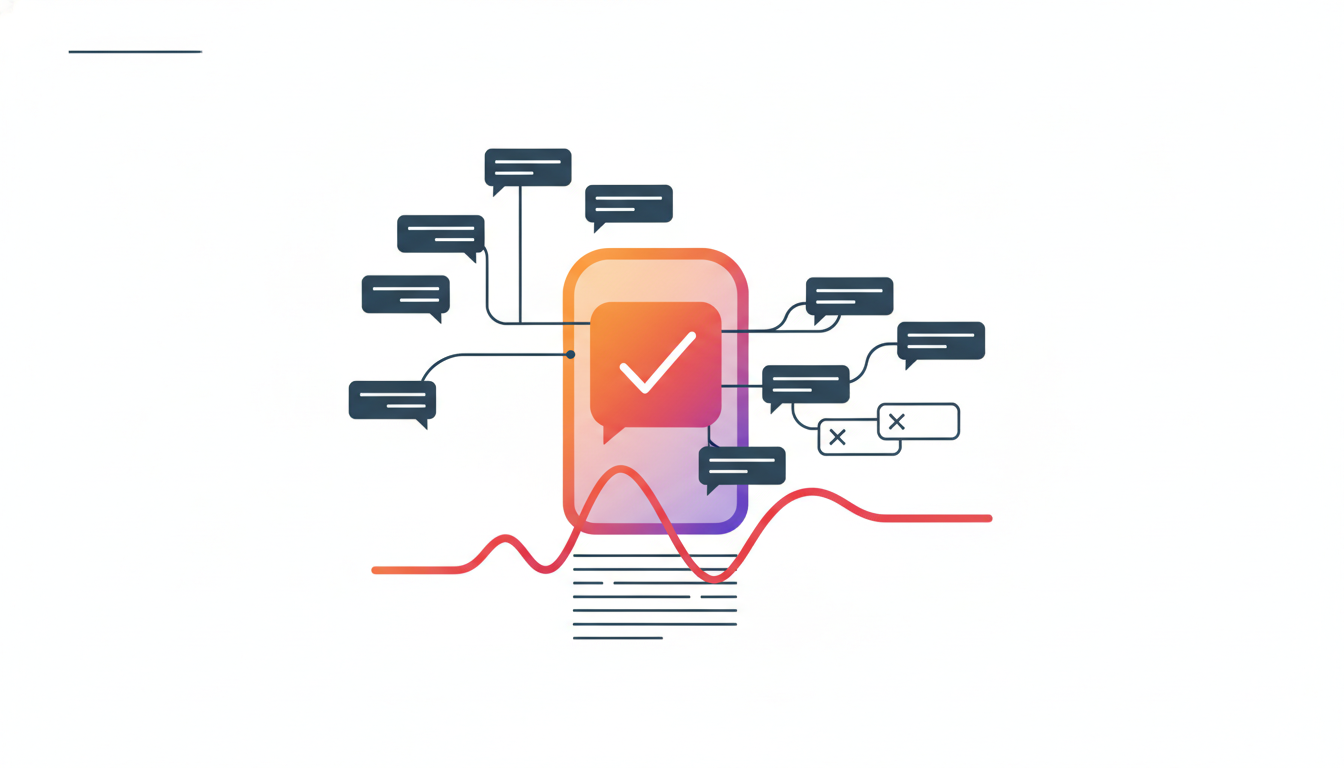
Sticker price ignores the massive cost of context windows and output generation required for complex reasoning. If you only need a label, generating explanatory text wastes money and increases latency significantly. You pay for words you do not use in your application logic.
This discrepancy is why general-purpose LLMs often fail at simple routing tasks. They generate unnecessary tokens that inflate your bill without adding operational value. A dedicated decision API avoids this by returning only the calibrated probabilities you requested.
How do output tokens, caching, and batching impact your AI API bill?
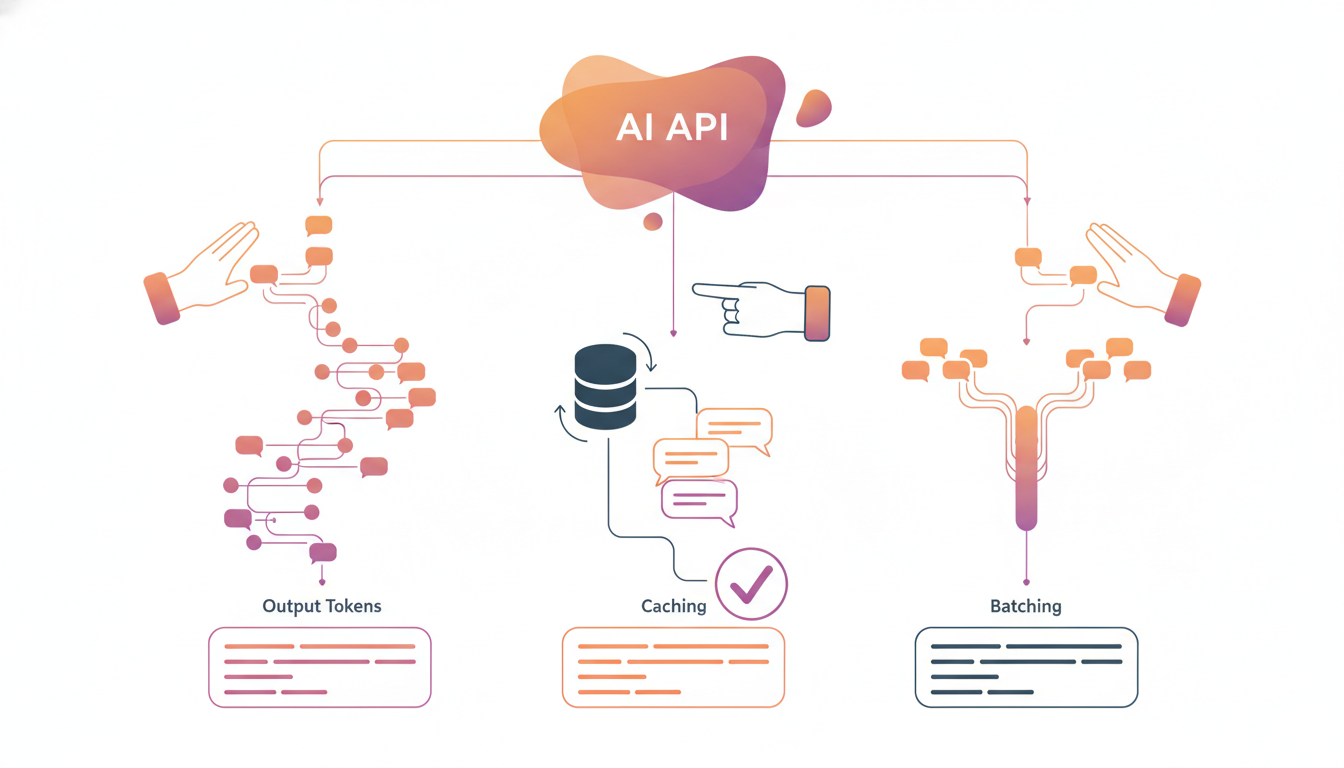
Output tokens often cost more than input tokens, and unmanaged context grows with every request. Batching multiple queries or caching identical inputs can cut bills by half without changing model performance. These tactics are essential for scaling without exploding your budget.
For high-volume workloads, you must treat context as a variable cost. If your prompt template remains static, you can cache the computed embeddings or intermediate states. Tools like Price Per Token help visualize these costs across different models.
Comparing major AI API providers: OpenAI, Claude, Gemini, and alternatives (2026 data)
Large LLMs offer flexibility but lack the efficiency of single-pass decision models. For high-volume routing, a dedicated decision API provides consistent latency and lower costs per decision than general-purpose models. This is critical when you need to process millions of events daily.
| Feature | General LLM (e.g., GPT, Claude) | Decision API (e.g., Laya, Jev) |
|---|---|---|
| Unit Cost | Per Token (Input + Output) | Per Question |
| Output | Text Generation | Calibrated Probabilities |
| Latency | Variable (often 200ms+) | Fixed (~120ms) |
| Best For | Content creation, complex reasoning | Routing, triage, tagging |
When evaluating partners, compare specific capabilities directly. Our own comparison with TypeSafe Jev shows where specialized models outperform on cost and speed.
Strategies for optimizing AI API costs in production
Start with aggressive caching for similar inputs and set strict token limits. If possible, route simple decisions through cheaper, specialized models before escalating to larger, more expensive systems. This hierarchical approach ensures you only pay for the capability required.
Monitor your actual usage patterns to identify where context bloat occurs. If a specific endpoint consumes 80% of your budget, review its prompt design. Reducing unnecessary system messages can yield immediate savings.
Key questions to ask before committing to an AI decision API provider
Ask about data retention, export options, and SLA guarantees for latency. Ensure the provider supports your required languages and offers transparent billing without hidden surcharges for context or retries. Compliance requirements often dictate these details more than raw cost.
Check their data residency policies if you handle health or financial data. Swiss-hosted solutions like medical data handling might be necessary for GDPR compliance. Always request a pilot to measure real-world latency and accuracy before signing long-term contracts.
FAQ
What is the cheapest AI API?
Pricing varies by workload, but decision-specific APIs often undercut LLMs for classification. You pay per resolved question rather than per token generated.
How much does an AI classification API cost?
Specialized models typically charge per million questions, often including a free tier. LLMs charge per token, which can be more expensive for short queries.
How do I optimize AI API costs?
Use caching for repeated inputs, batch requests where possible, and route simple tasks to smaller models. Monitor your token usage to detect inefficiencies early.
Topics
- AI API pricing comparison 2026
- cheapest AI API
- AI classification API cost
- LLM API pricing by provider
- token costs OpenAI vs Claude vs Gemini 2026
- cost-effective AI models
- AI API pricing per million tokens
- optimizing AI API costs