On this page (9 sections)
AI governance frameworks in 2026 combine legal mandates like the EU AI Act with technical standards from NIST and ISO. You need documented processes for data quality, model monitoring, and human oversight to avoid penalties and maintain trust.
Key takeaways
- EU AI Act enforcement begins August 2026, requiring strict documentation for high-risk systems.
- Calibrated probabilities replace vague scores, offering measurable confidence for audit trails.
- Zero data retention architectures simplify compliance by reducing liability over time.
- System 1 models provide faster, more stable decision-making than general LLMs for routine tasks.
What are the key AI governance frameworks in 2026?
The landscape has solidified into three main pillars: law, industry standards, and internal policy. The EU AI Act sets legal boundaries, while NIST and ISO provide technical implementation guides. Internal policies bridge the gap between legal text and engineering reality.
You cannot rely on a single document. A robust framework layers legal requirements over technical controls. For example, the EU Act mandates risk classification, while ISO/IEC 42001 specifies how to manage that risk continuously. We build our clients' frameworks to address all three simultaneously. This redundancy prevents gaps when regulators audit your system.
Why is AI governance critical for businesses today?

Governance is no longer optional; it is a baseline for operational continuity. Without it, you risk legal fines, reputational damage, and blocked deployments. Auditors demand proof that your models are safe and fair before allowing them in production.
We see companies underestimate the cost of rework. Fixing data lineage or fairness issues after deployment is expensive. A study on AI risk management found that organizations with mature governance reduce operational risk significantly, as noted in Splunk's analysis of enterprise AI security Splunk AI Risk Management. Start early to avoid technical debt that slows down innovation.
How do I implement data governance best practices for AI?
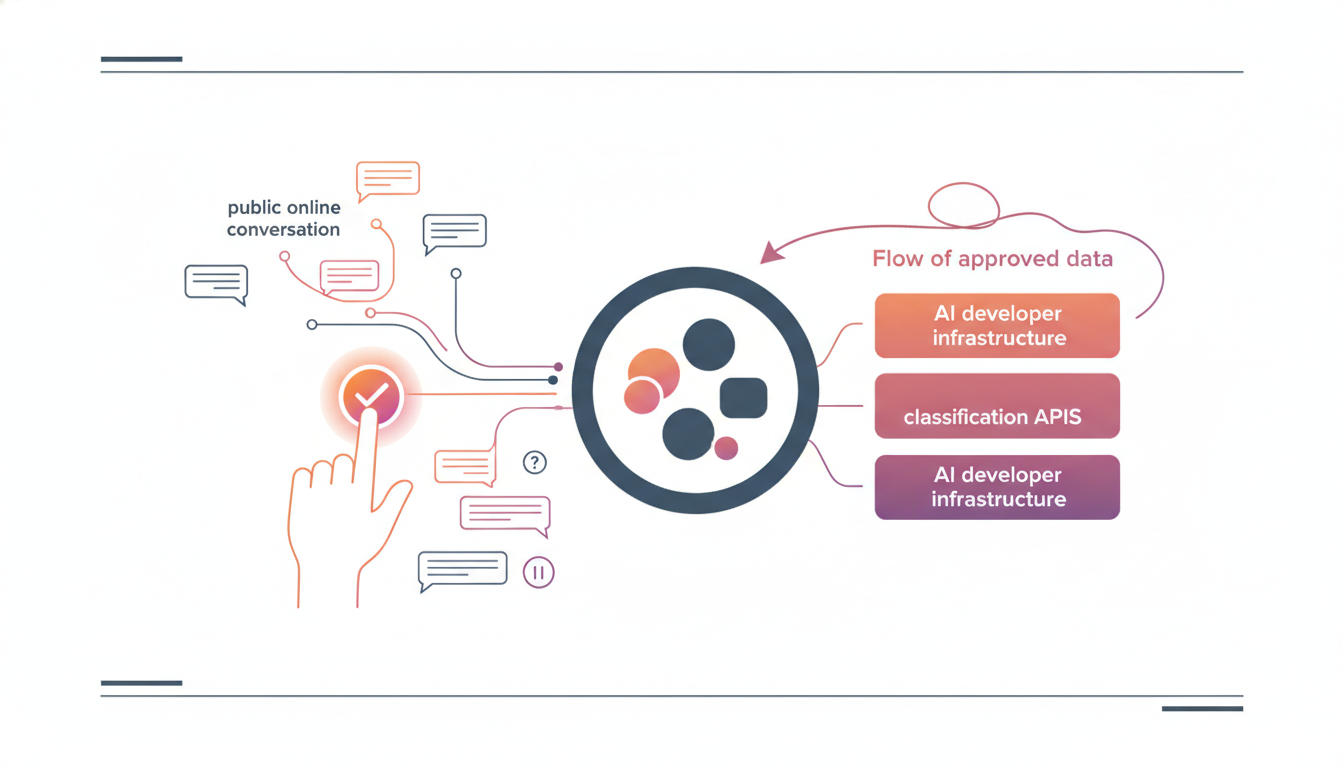
Data governance ensures your inputs are clean, documented, and traceable. You must know where every training datum comes from and how it was labeled. This includes versioning datasets and logging every inference request for later review.
Implement data catalogs to track lineage. Tools should flag PII before it enters your model. Good practices emphasize that data quality directly impacts model fairness and regulatory adherence, as outlined in industry best practices for AI governance Informatica AI Governance. Treat data as a product with owners, not just raw material for training.
How do I ensure ethical AI: fairness, transparency, and accountability?
Ethical AI requires measurable metrics, not just intent. You must test for bias across demographics and publish model cards explaining limitations. Accountability means assigning a human owner for every automated decision that affects people.
Transparency is key for user trust. When a system denies a loan or flags fraud, the user deserves an explanation. Explanable AI frameworks help regulated industries justify automated decisions to stakeholders Procogia Explainable AI. Document your testing results and keep them available for external review.
How do I navigate regulatory compliance: EU AI Act, NIST, and ISO standards?
Compliance is a checklist, not a philosophy. The EU AI Act categorizes systems by risk, with strict rules for high-risk applications. NIST offers a risk management framework to identify and assess AI risks. ISO/IEC 42001 standardizes AI management systems.
Here is a quick reference for the most relevant standards:
| Framework | Focus | Key Requirement |
|---|---|---|
| EU AI Act | Legal Compliance | Risk classification and documentation for high-risk systems. |
| NIST AI RMF | Risk Management | Map, Measure, Manage, and Govern AI risks. |
| ISO/IEC 42001 | Management System | Certifiable standard for AI governance and operations. |
For high-risk systems, prepare now for the August 2026 deadline by reviewing our guide on Navigating the EU AI Act's August 2026 Deadline.
How do I build an audit-ready AI system?
Audit readiness means your logs tell a complete story. Every inference request needs a timestamp, input hash, and output confidence score. You need to reproduce past decisions exactly if challenged.
Keep training and evaluation data under strict version control. Do not rely on transient logs. A system that can regenerate its audit trail within minutes saves days during an investigation. This documentation is vital for proving you met due diligence requirements under new regulations.
What is the role of specialized AI (System 1) in a governed AI landscape?
General LLMs are powerful but hard to govern due to hallucinations and variable outputs. Specialized System 1 models provide deterministic, fast decisions for routine tasks. They reduce surface area for errors.
System 1 models like Laya run in milliseconds without generating free text. This stability makes them easier to validate and audit. They are ideal for routing, tagging, and initial triage. We detail how these models work in our guide on Beyond LLMs: The Rise of Specialized System 1 AI. Using them limits the scope of high-risk deployments.
How do I future-proof my AI governance strategy?
Strategies must evolve as regulations change. Assume new standards will emerge in the next five years. Design your systems to swap components without rewriting entire pipelines.
Focus on data residency and retention policies. Hosting in jurisdictions with strong privacy laws reduces compliance friction. Our guide on The Swiss Advantage: How AI Data Residency and Zero Retention explains how zero retention simplifies data protection audits. Flexibility is your best defense against shifting regulatory tides.
FAQ
What is the most important framework for EU businesses?
The EU AI Act is the primary legal mandate. It requires specific documentation and risk assessments for high-risk AI systems used within the European Union.
How do NIST and ISO standards differ?
NIST provides a flexible risk management framework for identifying threats. ISO/IEC 42001 is a certifiable standard for managing AI governance within an organization.
What makes a model "high-risk" under the EU AI Act?
Systems used in critical infrastructure, education, employment, or law enforcement are typically classified as high-risk due to their impact on fundamental rights.
Why use calibrated probabilities instead of text labels?
Calibrated probabilities offer a measurable confidence score. This helps auditors understand the certainty of a decision, which is safer than relying on opaque text output.
How do I start implementing AI governance today?
Begin by inventorying your existing AI systems and classifying their risk levels. Then, document your data flows and establish clear ownership for automated decisions.
For more on reducing costs while maintaining compliance, check out our analysis on The True Cost of AI Decision APIs in 2026. You can also explore our System 1 decision models at Laya Studio to see how specialized inference supports your governance goals.
Topics
- AI governance frameworks 2026
- AI compliance standards
- ethical AI development guidelines
- AI risk management frameworks
- data governance for AI
- AI model accountability
- EU AI Act compliance
- NIST AI RMF