On this page (7 sections)
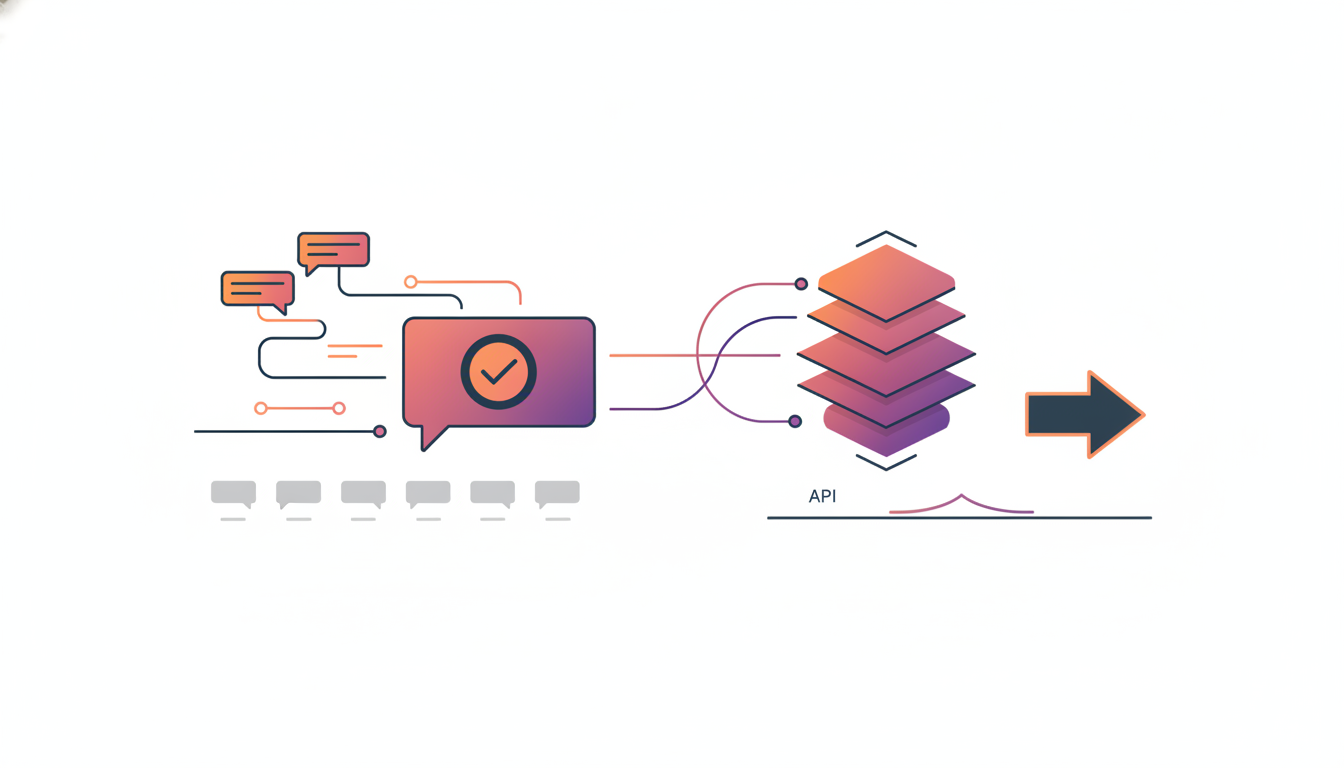
Specialized AI classification wins on speed and cost where generative models fail. LLMs hallucinate labels and chew through budgets; purpose-built decision APIs return calibrated probabilities in under 150 milliseconds.
Key takeaways
- System 1 AI avoids hallucination by outputting scores, not text.
- Swiss-hosted services ensure zero data retention for strict compliance.
- Benchmarks show dedicated classifiers beat generic LLMs on consistency.
Why LLMs Fall Short for Critical Classification
Generative models were built for writing, not routing. When you force an LLM to classify high-volume tickets, you pay for tokens and wait for latency. In production, this cost scales linearly with traffic.
We see teams switch after their support queue backs up. A single mislabeled ticket can cascade into the wrong agent queue. General-purpose models lack deterministic guarantees on labels. You get a response, but checking its confidence requires parsing text again. For non-generative AI for decisions, you need a system that returns a probability score first, then you act on it.
What Is System 1 AI?
System 1 AI refers to models optimized for fast, automatic, non-generative decisions. Unlike LLMs that generate free text, these models output structured answers like probabilities or categorical scores. They treat classification as a scoring task. This distinction matters for safety.
When the output is fixed to a specific schema, the risk of "hallucination" disappears. The model cannot invent a reason to reject a request. It simply evaluates the input against your definition. As detailed in standard task guides, text classification is often about mapping inputs to predefined categories rather than creating new ones. Transformers text classification tasks show this pattern clearly.
Key Advantages of Specialized AI for Real-time Decisions
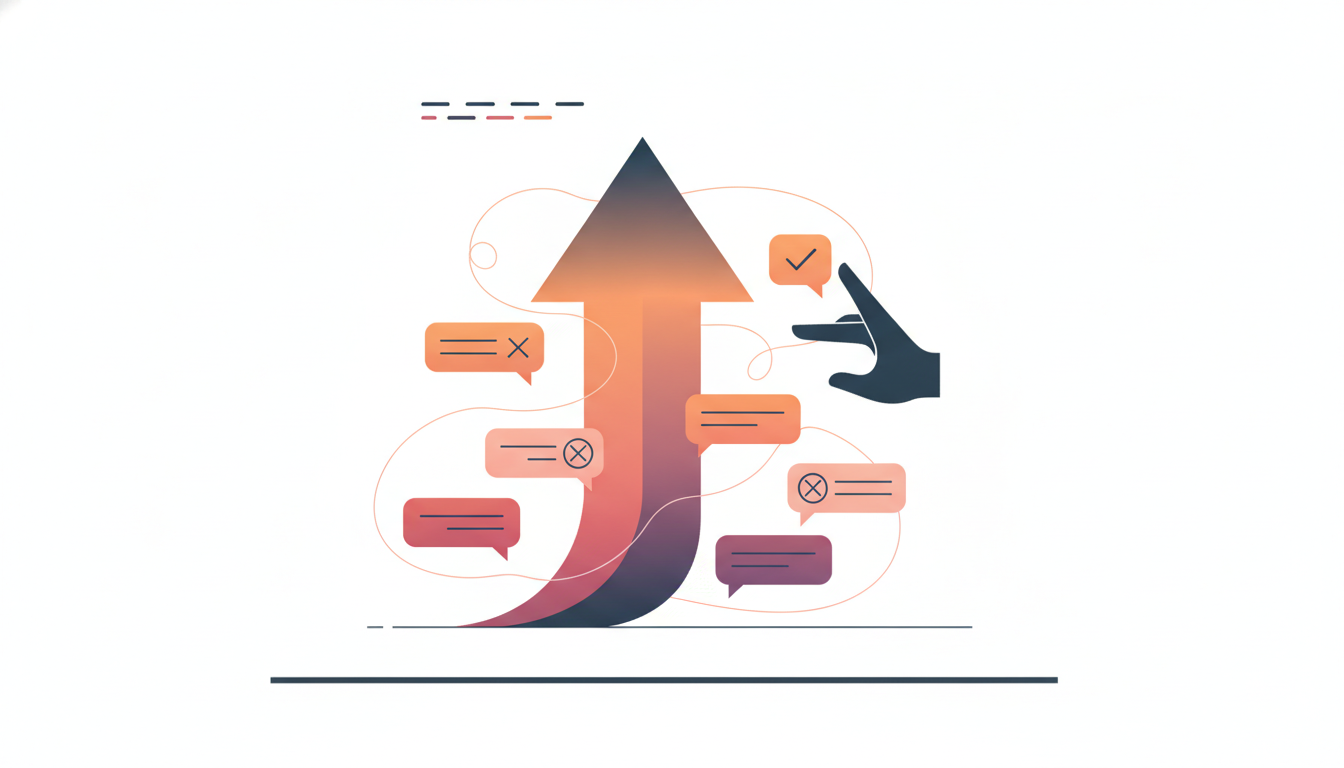
The primary benefit is predictability. You get the same result for the same input without complex prompt engineering. Latency stays low because the model doesn't generate tokens step-by-step. Pricing aligns with volume. You pay per question or decision, not per token of generated text.
Here is how specialized AI classification stacks up against general LLM prompts:
| Feature | Specialized AI | LLM Prompt |
|---|---|---|
| Latency | ~120ms | 1s+ |
| Cost | Per question | Per token |
| Output | JSON scores | Free text |
| Hallucination | Low (scored) | High (text) |
| Compliance | Data retention rules | Varies |
Real-Time Text Classification API Integration
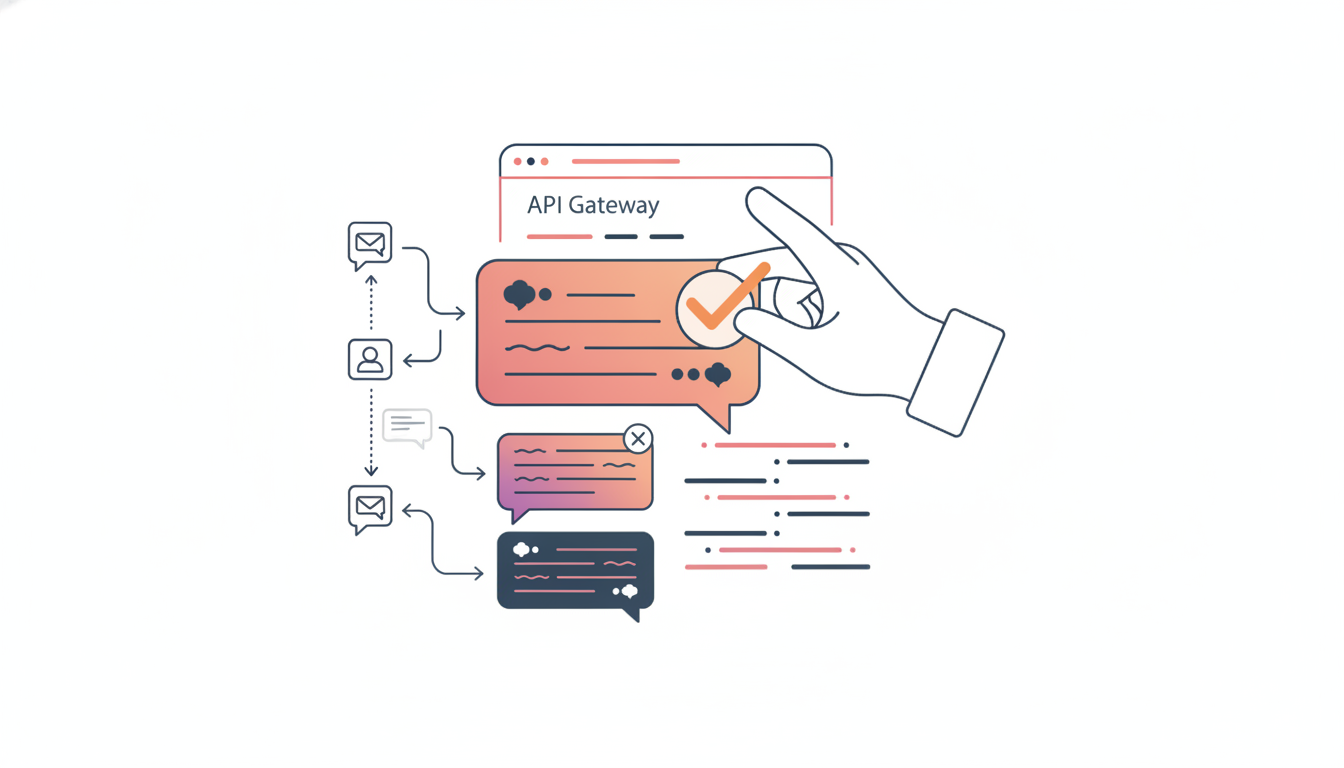
Integration should feel like a standard REST call. You send JSON with your data and the specific question you want answered. For example, asking "Is this ticket urgent?" returns a probability like 0.95. You decide the threshold.
We recommend setting a confidence threshold in your code. If the probability is 0.6 or higher, route automatically. If lower, flag for review. This pattern prevents bad auto-escalations. For deeper guidance, see our guide on Real-time AI Classification for Enhanced Customer Support Routing.
LLM Alternatives for Classification (Jev & Laya)
If you need a direct swap for existing pipelines, look for protocol compatibility. Laya Studio offers an API compatible with TypeSafe Jev. This means you can switch providers without rewriting your client code.
The trade-off often comes down to model performance on specific datasets. Benchmarks show variation. In our tests, Jev performed well on certain tasks, but our models optimized for different constraints. We do not claim universal superiority. You should verify accuracy on your own validation set. Compare the detailed breakdown here.
Measuring Success: Benchmarking Accuracy and Latency
Do not trust average F1 scores alone. Break performance down by class. A model might be great at "spam" but terrible at "refund" requests. Real-world success depends on your specific edge cases.
We measure our API at ~120ms from Europe. This is consistent regardless of text length. Most LLMs slow down as input size grows. For low latency AI decisions, fixed-time processing is a requirement. When you audit your API logs, check the variance. High variance means jitter, which breaks timeouts.
Use Cases Where System 1 AI Shines
Beyond sentiment analysis, this technology solves routing and triage problems. In healthcare, distinguishing urgent symptoms from general questions is critical. In finance, flagging potential fraud requires speed.
- Customer Support: Route tickets to the right department instantly.
- Fraud Detection: Flag transactions before the user leaves the page.
- Medical Triage: Prioritize patient messages based on clinical keywords.
We explore fraud workflows in depth in The Role of System 1 AI in Real-time Fraud Detection. For health teams, data residency is non-negotiable. Switzerland's strict data laws ensure your patient data never leaves the region. Learn why Swiss-hosted AI matters for medical data.
Choosing the Right Specialized AI Solution
When selecting a vendor, ask about data retention. Some services store logs for debugging by default. If you handle PII, this creates risk. Look for zero-retention guarantees. Also, check pricing. Some charge per token or input length. This is expensive for classification.
Laya Studio charges per question. You get 100,000 free, then $5 per million. This makes budgeting predictable. It is independent of major hyperscalers, avoiding vendor lock-in. Read about The True Cost of AI Decision APIs in 2026 for more math.
Future-Proofing Your Decisions with Non-Generative AI
Non-generative models will dominate decision pipelines where precision matters. They use less compute, which is better for the environment. They cost less, which is better for your bottom line. But they are not magic. You still need good labeled data to train or select them.
For teams debating Jev vs Laya, remember that protocol compatibility helps. You can migrate if performance needs shift. Avoid over-investing in custom fine-tuning unless necessary. Often, a robust prompt or classifier covers the need.
FAQ
What is the difference between LLM classification and System 1 AI?
LLMs generate text to explain answers, which is slow and expensive. System 1 AI outputs direct scores or probabilities, which is faster and deterministic.
How accurate is specialized AI classification compared to human annotators?
It depends on the specific task. We benchmark against your gold standard. Some models hit high accuracy, others trade speed for precision. You must measure on your own data.
Does Laya Studio store my input data?
No. We operate with zero data retention. Your inputs are processed for inference and discarded immediately. This meets strict GDPR requirements.
Can I use this for multi-label classification?
Yes. You can ask multiple questions in one request. The API returns a probability for each question independently.
Is there a free tier for testing?
Yes. We offer 100,000 free questions to start. This lets you validate accuracy before moving to production workloads.
Explore how our decision API fits your stack at Laya Studio. Start testing today to reduce latency and costs in your pipelines.
Topics
- specialized AI classification
- System 1 AI vs LLM classification
- real-time text classification API
- non-generative AI for decisions
- Laya Studio use cases
- AI classification accuracy benchmarks
- low latency AI decisions
- deterministic AI classification