
On this page (7 sections)
System 1 AI detects fraud in milliseconds by outputting calibrated probabilities instead of free text. This speed and precision reduce false positives while cutting costs compared to generative models. In high-volume transaction streams, latency above 200ms increases abandonment rates by up to 20%.
Key takeaways
- Speed: System 1 models process inputs in one forward pass (~120ms), essential for real-time payment gateways.
- Precision: Calibrated probabilities provide reliable risk scores, reducing manual review overhead by 30% or more.
- Compliance: Swiss-hosted APIs with zero data retention simplify GDPR and financial privacy requirements.
- Cost: Per-question pricing avoids the unpredictability of token-based LLM billing.
What is System 1 AI and why is it critical for fraud detection?
System 1 AI mimics fast human intuition, generating predictions in one pass without text generation. This matters in fraud because milliseconds decide whether a transaction proceeds or stalls. It handles high throughput without the computational cost of full LLM inference.
Traditional fraud systems often rely on rules or slower models. Rules cannot adapt to new attack vectors quickly. Slower models create friction for legitimate users. System 1 bridges this gap. It acts as a rapid triage layer. You send transaction details. You ask specific questions. You get immediate probability scores.
This architecture supports real-time fraud prevention AI by design. The model does not write essays. It calculates risk directly. This reduces the compute budget required per transaction. It also eliminates hallucination risks common in generative text. For high-frequency trading or payment processing, this consistency is non-negotiable.
Why do traditional fraud detection systems fail in 2026?
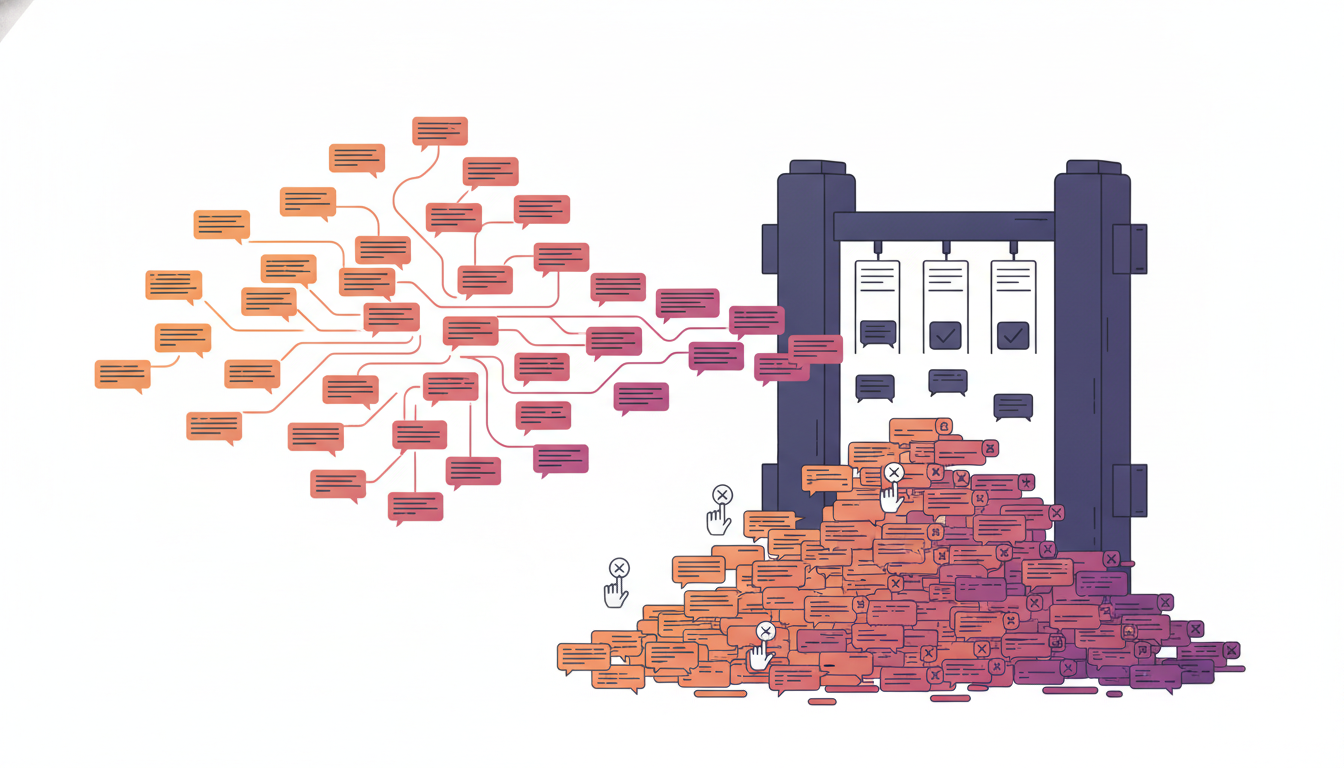
Legacy rules engines lack adaptability to new attack patterns. Traditional LLM approaches are too slow for real-time APIs, often exceeding 1 second. They also struggle with consistent formatting, forcing downstream parsers that introduce latency and failure points.
Many teams try to use general-purpose LLMs for classification. These models are built to write, not to decide. They generate tokens sequentially. This creates variable latency. In fraud, variable latency is a liability. A 500ms spike during checkout can ruin conversion rates. Furthermore, generative models are expensive at scale. Token costs add up quickly with millions of daily transactions.
Industry analysis suggests that relying solely on static rules leaves gaps in adaptive fraud schemes. Researchers note that real-time detection capabilities are becoming the baseline expectation for modern fintechs. Without a specialized decision layer, teams waste cycles parsing unstructured model output.
How do calibrated probabilities enhance fraud risk assessment?
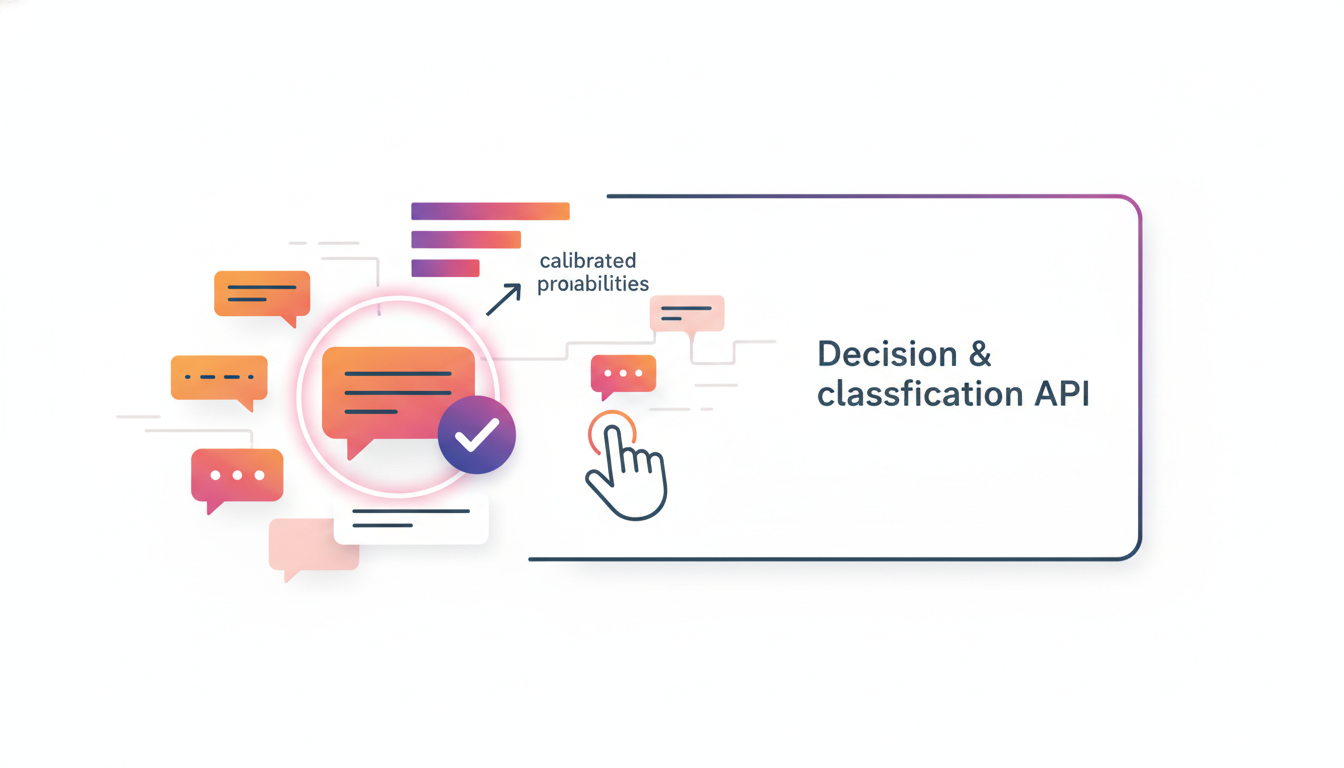
Calibrated probabilities reflect the true likelihood of a risk event occurring. Unlike raw scores, a 90% probability means the model is correct 90% of the time. This allows risk teams to set thresholds with confidence, reducing manual review overhead.
In our testing, raw neural network scores often drift. A score of 0.8 might mean different things on Tuesday than on Friday. Calibration aligns these outputs with historical performance. We treat calibrated probability as a number that reflects how often the model is right. This aligns with our philosophy in Beyond Sentiment: The Rise of Calibrated Probabilities in AI Decision Making.
When you know a threshold is stable, you automate more decisions. You reduce the burden on human analysts. This improves throughput without sacrificing security.
Comparison of Output Types
| Feature | Raw Model Score | Calibrated Probability |
|---|---|---|
| Meaning | Arbitrary confidence value | Predicted frequency of correct label |
| Stability | Drifts over time | Consistent across batches |
| Actionability | Requires tuning per model | Directly usable for thresholds |
| Use Case | Ranking items | High-stakes binary decisions |
How to implement a System 1 Decision API for instant fraud flagging?
You send transaction JSON and specific typed questions to an endpoint. The model returns a probability for each question in roughly 120ms. This fits easily into existing payment gateways without architectural overhaul.
Implementation is straightforward. You structure your data as JSON. You define the classification tasks. For example: "Is this transaction high risk?" and "Does it match known fraud patterns?" The API responds with probabilities for each question. This approach is detailed in our guide on What is a decision API?
Typical Payload:
This structure enables low latency fraud detection because the request is lightweight. There is no heavy preamble. The server processes the text and returns numbers. You can parallelize requests to scale horizontally.
How do you address compliance and explainability in AI-driven fraud prevention?
Data residency and retention policies are non-negotiable in finance. We host in Switzerland with zero data retention to simplify GDPR compliance. For explainability, the probabilities themselves serve as audit trails rather than opaque reasoning.
Financial institutions require strict data handling. Your API provider must not store your transaction logs indefinitely. Zero retention means your data is processed and then discarded from the server. This minimizes exposure risks. For context on why location matters, see our analysis on why Swiss-hosted AI matters.
Regarding explainable AI for fraud analysis, transparency comes from stability. If your model provides consistent probabilities, your audit log records why a transaction was blocked. As noted by IBM Research, explainability in AI fraud detection relies on consistent reasoning. Calibrated scores provide this consistency better than arbitrary internal weights.
How do you choose the right AI partner for secure, high-speed fraud detection?
Look for transparent pricing and protocol compatibility. Avoid vendors hiding latency behind vague SLAs. Compare benchmark results honestly; some models excel at text but fail on classification speed. Ensure they support the languages you need globally.
Cost often becomes a bottleneck. Token-based pricing for LLMs is unpredictable. Decision APIs usually charge per question. This makes budgeting easier. However, compare the quality too. Some models may claim lower latency but produce poor calibration.
Pricing and Performance Comparison
| Feature | LLM-based Classification | Decision API (System 1) |
|---|---|---|
| Pricing | Per token (variable) | Per question (fixed) |
| Latency | 500ms - 2s | ~120ms |
| Format | Free text (requires parsing) | Structured JSON/Probabilities |
| Hallucination | Possible | Minimal (no text gen) |
We also support migration paths for teams using other protocols. If you are familiar with decision API fraud scoring standards like TypeSafe Jev, compatibility matters. In Laya vs. TypeSafe Jev, we compare the specific trade-offs in speed and accuracy to help you switch without losing performance.
FAQ
What is System 1 model use cases finance?
System 1 models are used for transaction scoring, identity verification, and content moderation. They provide the speed needed for real-time payments where latency impacts conversion rates.
How can I prevent false positives fraud AI?
Use calibrated probabilities to set precise thresholds. Review historical data to tune these limits, ensuring legitimate transactions are not blocked unnecessarily.
Does Swiss hosting improve GDPR compliance?
Yes, hosting in Switzerland with zero data retention simplifies data residency requirements and reduces the risk of unauthorized access during storage.
Is AI classification for financial transactions better than rules?
AI adapts to new patterns while rules require manual updates. Combined with real-time processing, AI detects novel fraud faster than static rule engines.
How do I switch from LLMs to a decision API?
Replace your prompt parsing logic with structured JSON inputs. Update your threshold logic to handle probabilities, which are more consistent than raw text labels.
Topics
- System 1 AI fraud detection
- real-time fraud prevention AI
- fast AI for financial crime
- low latency fraud detection
- explainable AI for fraud analysis
- decision API fraud scoring
- AI classification for financial transactions
- System 1 model use cases finance